If you’ve ever stood on a dock watching a work boat zoom past—whether it’s hauling gear, clearing debris, or helping with construction offshore—you might’ve thought, “That thing’s not just a generic boat, right?” And you’d be dead on. As a work boats supplier, I get questions all the time: Can you really customize these things for specific jobs? Short answer: Absolutely. It’s not just a luxury—it’s how you get work done right, safely, and without wasting time (and money) on features you’ll never use. Work Boats

Let me break it down from what I see every day. A lot of folks come to us thinking, “Any work boat will do the trick,” but that’s like saying a pickup truck is the same for moving furniture as it is for off-roading in the mountains. Sure, both get you from A to B, but their builds are tailored for totally different tasks. Same with work boats.
Take a few examples I’ve worked on lately. Last year, a coastal maintenance company needed a boat to clean floating aquatic weeds out of their local waterways. A stock 24-foot work boat would’ve had flat deck space, but it didn’t have the reinforced mounts for their weed-chopping equipment, or the shallow draft to glide through the 2-foot-deep channels where weeds piled up. We swapped out the standard deep-V hull for a modified shallow-draft hull, added a heavy-duty steel frame to bolt their weed cutter to, and even installed a self-draining bilge that handles the slop from chopped weeds without gumming up the works. That boat’s not just a modified stock boat—it’s built specifically for weed removal. It wouldn’t work for hauling construction materials offshore, and that’s exactly the point.
Another client: a small marine construction firm. They didn’t need a weed boat—they needed something to haul steel rebar, concrete forms, and tooling out to job sites 10 miles off the coast. A stock work boat’s deck might’ve held 2,000 pounds, but they needed to carry 5,000, plus have secure tie-downs for heavy, bulky gear. We beefed up the hull’s structural stringers, added cross-bolted cleats every 2 feet along the gunwale, and installed a covered storage box for their power tools so they didn’t get saltwater damage. We even adjusted the fuel tank size—stock tanks hold 50 gallons, but they needed 120 gallons to make the round trip without refueling. That’s customization that actually makes their job possible, not just convenient.
Now, I know what some people might be thinking: “Customization sounds expensive.” Yeah, it can cost a bit more upfront, but let’s talk long-term. A generic boat for a job that’s way too big or small for it? You’ll deal with breakdowns constantly, wasted fuel because the hull isn’t optimized, and having to rent extra gear to make up for what the stock boat lacks. That adds up way faster than a customized build. We once had a client who rented a stock boat for 6 months before coming to us—they spent $12,000 on rentals and repairs that would’ve been covered in a $8,000 customized boat. So it’s not just a nice-to-have; it’s a cost-saver in the long run.
But here’s the thing: customization doesn’t mean we build a totally one-of-a-kind boat from scratch every time. That’s a myth a lot of folks have. We use a core hull design that’s proven reliable, then tweak it to match the task. It’s called “modular customization,” and it’s how we keep costs reasonable while still delivering a boat that fits like a glove. Want a longer deck for carrying bulk materials? No problem, we extend the modular deck section. Need a higher freeboard to keep saltwater out during rough seas? We adjust the gunwale height. Even small details—like the type of seating for a crew that’s on board 12 hours a day, or a built-in workbench for prepping tools mid-job—count as customization that makes a huge difference.
Wait, let’s talk about some of the more niche tasks we’ve handled, because that’s where customization really shines. A few months back, a research university reached out. They needed a boat to take marine biologists out to study coral reefs, collect water samples, and deploy small sensors. A standard work boat would’ve had a noisy engine that scares fish, plus a flat deck that makes it hard to move equipment without tipping. We swapped the standard gas engine for a quieter diesel (less noise, less impact on marine life), added a non-slip, low-profile deck for safe movement, and even installed a dedicated mounting rail for their sample collection containers—no more setting buckets on the deck where they spill or slide. That boat’s not a work boat; it’s a research tool. You can’t get that from a stock model.
And what about emergency response? Fire departments that need boats to fight brush fires along shorelines, or search-and-rescue teams that need fast, maneuverable craft to find people in rough bays. Those need totally different builds than a utility boat for construction. Fire response boats need fire hoses mounted on the bow, corrosion-resistant materials to stand up to fire retardant chemicals, and extra buoyancy in case they take on water. Search-and-rescue boats need a shallow draft to get into tight coves, a high-speed engine, and first-aid storage built right into the console. Stock boats can’t check all those boxes, but a customized one can.
I’ve also noticed that a lot of new businesses getting into the work boat game come in with a vague idea, not a specific task list. That’s where we step in—we walk through every detail with them. First, we ask: Where will this boat operate? Shallow rivers, deep offshore, tight estuaries? Then, what’s the main thing it will carry or do? Equipment, materials, people, research gear? And then, what are the “must-haves” vs. “nice-to-haves”? That’s how we build something that works for them, not a generic model that doesn’t fit.
For example, a guy starting a small shellfish farm wanted a boat to tend his oyster beds, check on lines, and harvest small batches of oysters for market. He came in saying, “Just give me a work boat.” When we asked more questions, he mentioned his beds are in 3-foot-deep water, he needs to lift oyster crates (about 100 pounds each) onto the deck, and he wants to wash them off on board before heading back. So we customized a 16-foot boat with a shallow 18-inch draft, a hydraulic lift to hoist the crates (no more bending over), and a built-in washdown pump with a fresh water tank. He’s been using it for 18 months now, and he says it’s cut his work time in half. That’s the difference customization makes.
Now, let’s clear up a common misconception: Some people think customized boats take way longer to build. Sure, a totally custom one-of-a-kind boat would take longer, but our modular process means we can deliver a customized boat in about 4-6 weeks, same as a stock model. We have pre-built parts that we adjust for each job—so when a client wants a longer deck, we don’t build a whole new deck from scratch; we adjust a pre-built module to their specs. That keeps lead times short, which is a big deal when you need a boat to start a job.
I’ve seen too many clients end up stuck because they grabbed a stock boat that didn’t work for their task. Last year, a construction company bought a generic 20-foot work boat to haul equipment to a job site, and within a month, the hull started cracking under the weight of the heavy tools they were carrying. They spent $3,000 on repairs, and lost a week of work waiting for the boat to fix. If they’d come to us first, we’d have reinforced the hull and added extra supports to handle their load. That’s not a mistake we want our clients to make.
So, to circle back to the original question: Can work boats be customized for specific tasks? Yes—they absolutely can, and it’s not a luxury, it’s a smart business move. It’s about building a boat that does exactly what you need, without wasting money on features you’ll never use, and without dealing with the headaches of a one-size-fits-all model that just doesn’t fit.
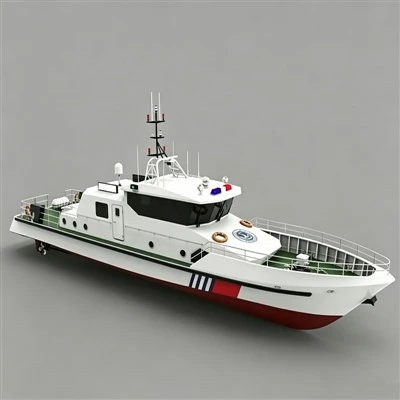
If you’re in the market for a work boat, or you’re not even sure what you need yet, don’t just settle for a stock option. Hit us up to chat through your task, your location, and what you need the boat to do. We’ll walk you through all the customization options, keep it budget-friendly, and get you a boat that’s built for your job, not anyone else’s.
Patrol Boats References
- National Marine Manufacturers Association. (2022). Custom Work Vessels: Trends in Modular Design for Commercial Use.
- U.S. Coast Guard. (2021). Commercial Work Boat Safety and Performance Guidelines.
- Marine Technology Society. (2023). Small Work Craft Customization for Niche Commercial Applications.
Longkou Jinda Shipping Co., Ltd.
With abundant experience, we are one of the most professional work boats manufacturers and suppliers in China. Please feel free to buy high quality work boats made in China here from our factory. We also accept customized orders.
Address: North of Shuangyu Village, Xingjia Sub-district, Longkou City, Yantai City, Shandong Province
E-mail: Leo99999@qq.com
WebSite: https://www.jindaship.com/
