If you’ve ever driven past a utility-scale wind farm on a clear, windy day, you might have watched dozens of turbine blades spinning in unison, seemingly effortless against the sky. What you might not see is the quiet work happening at the heart of every turbine’s ability to catch that wind: the wind vane. For years, I’ve supplied precision wind vanes to wind energy researchers, test facilities, and turbine manufacturers, and what never ceases to strike me is how many people—even some in the energy space—still view these small, unassuming devices as mere afterthoughts, not the backbone of reliable wind energy research. Let’s break down exactly what role wind vanes play in this field, why their accuracy and reliability matter, and why they’re worth investing in for anyone serious about advancing wind energy. Wind Vanes
First, let’s ground this in a basic truth: wind energy is entirely dependent on wind, and wind is not constant. It shifts direction, speed, and turbulence over seconds, minutes, and hours—far faster and more variably than even the most sophisticated turbine control systems can keep up with without real-time data. Wind vanes, sometimes called wind direction sensors, are the primary source of that real-time directional data. But their role goes far beyond just telling a turbine which way the wind is blowing. For researchers, that data is the starting point for every study, test, and improvement that makes wind turbines more efficient, safer, and cost-effective.
Take turbine performance testing, for example. When a new turbine model is in development, manufacturers don’t just roll it out to a farm and hope it works—they spend months or years in controlled test sites, gathering data to fine-tune blade design, control algorithms, and power output. A critical part of that testing is understanding how wind direction interacts with the turbine. If a wind vane is mounted improperly, or is inaccurate, all of that data becomes useless. Let’s say a test turbine shows a 10% drop in power output during a 24-hour period; researchers need to know if that drop was caused by a shift in wind direction, or a flaw in the turbine’s blade pitch. Without a precise wind vane, they can’t tell the difference. Over my years supplying these sensors, I’ve worked with test facilities that’ve had to rerun entire testing campaigns because their original vanes drifted 5 to 7 degrees—enough to skew direction calculations so much that performance data was invalid. That’s not a small mistake; it delays product launches, wastes millions in development costs, and slows the rollout of clean energy.
Then there’s the study of wind turbulence and wake effects, two of the biggest challenges facing wind farm operators today. Wake effect, for anyone who doesn’t know, is when the blades of a turbine disrupt the wind flow behind it, creating a slow, turbulent “wake” that reduces the power output of any turbines downstream. A wind farm’s energy production can drop by 10 to 20% because of this—sometimes even more, depending on layout and wind direction. To study and mitigate this, researchers place wind vanes at multiple points across test wind farms: at the base of individual turbines, at mid-height up the tower, and even on meteorological masts a kilometer or more away from the farm. Each of these vanes captures wind direction at different heights, letting scientists map how the wake moves, how it shifts when wind direction changes, and how rearranging turbine layout can cut down on lost energy. I remember a few years back, a team at a university was testing a new turbine layout for a coastal wind farm, and their initial simulations predicted a 15% reduction in wake loss. But when they deployed high-precision wind vanes across the site, they found that coastal wind direction shifted 12 degrees more frequently than their models had accounted for—so their layout needed to adjust, adding another 8% to their projected energy output. That’s the value that a good wind vane brings: it turns theoretical models into real, actionable data.
Another key role of wind vanes in research is site assessment, which is the first step any developer takes before building a wind farm. A bad site can sink a project before it even breaks ground, and a big part of site assessment is measuring long-term wind patterns. Wind vanes, paired with anemometers (which measure speed), stay on meteorological masts for 12 to 24 months, recording wind direction every few seconds. That data is used to calculate the annual energy production (AEP) of the site, which is the single biggest number that determines whether a project is financially viable. If a wind vane only records wind direction within 20 degrees of true north, it will miscalculate how much wind blows from other directions—say, the direction of a proposed new road or the coast, which might create turbulence. For a 100-turbine wind farm, a 5% error in AEP can mean a difference of millions of dollars in revenue over the life of the project. That’s why site assessment teams rely on the most accurate wind vanes available; I’ve supplied units with accuracy within ±1 degree, which is the industry standard for long-term site data.
Wind vanes also play a critical role in advancing next-generation wind energy technology, like offshore wind turbines. Offshore wind is one of the fastest-growing segments of renewable energy, but it comes with unique challenges: saltwater corrosion, strong, consistent winds, and the need for turbines to operate in rough, variable conditions. Offshore wind vanes have to be far more durable than onshore models—they have to withstand hurricane-force winds, salt spray, and extreme temperature shifts. Researchers working on offshore turbine designs use wind vanes to test how turbines respond to extreme gusts and direction shifts, which are much more common at sea. A few years ago, I supplied a set of vanes for a offshore research project in the North Sea; these units were designed to operate at 50 meters above sea level, with no maintenance for 5 years. The project team needed to know how sudden 90-degree wind shifts would affect the turbine’s yaw system (the part that turns the turbine to face the wind), so they could design a yaw control algorithm that reacted fast enough to prevent damage. Without those wind vanes, they would have had to rely on simulating wind conditions, which can never capture the exact turbulence and direction shifts that real offshore winds bring.
It’s not just large-scale turbine research, either. Even small, distributed wind energy systems—like residential or commercial turbines—rely on wind vanes for testing and improvement. While these turbines are smaller, they still need to adjust to wind direction to maximize power, and researchers are working to make these smaller systems more efficient for rural communities. I’ve supplied wind vanes to small business owners and university teams testing low-cost, low-maintenance turbines for use in remote areas, where grid access is limited. For these projects, a wind vane that’s easy to install and accurate enough to track daily wind shifts can mean the difference between a turbine that generates enough power for a home and one that falls short.
Now, let’s talk about what makes a good research-grade wind vane, because not all vanes are created equal. I’ve seen a lot of budget vanes marketed for wind energy use, and they almost always fall short in research settings. The key specs here are accuracy, response time, durability, and resolution. Accuracy, as I mentioned, is crucial: for research, you want a vane with an accuracy of at least ±1 degree, not the ±5 degrees you might see on a cheap model. Response time matters too—wind direction can shift in less than a second, so a vane that takes 10 seconds to adjust will miss fast, turbulent shifts, leading to incomplete data. Durability is non-negotiable for long-term deployments; vanes in research sites have to sit outdoors year-round, in rain, snow, sun, and wind, so they need to be corrosion-resistant, with sealed bearings that don’t freeze or wear out.
Of course, there are common mistakes I see people making when selecting wind vanes for research projects. One is mounting location: a vane mounted too close to a building or another turbine will get “dirty” wind data, because the wind is disturbed by the nearby structure. Another is overbuying: research projects have different needs, so you don’t need the most expensive offshore-grade vane for a onshore site that’s only collecting data for a month. The key is matching the vane to the specific research goal.
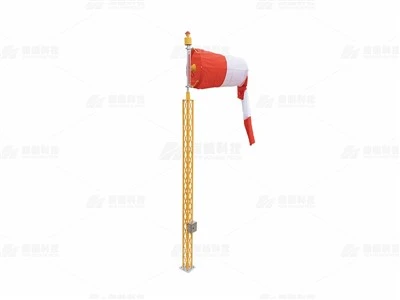
As someone who’s been in this field for years, I’ve seen firsthand how small, unassuming components like wind vanes can shape the future of wind energy. Every breakthrough in turbine design, every improved wind farm layout, every step toward making renewable energy more affordable—they all start with accurate, reliable wind direction data from a wind vane. If you’re a researcher, a test facility manager, or a developer working on advancing wind energy, you know how critical every data point is. Don’t let a cheap or inaccurate wind vane derail your work. Whether you’re setting up a new test site, running performance tests, or conducting long-term wind resource studies, I’ve got the precision, durable wind vanes you need to get reliable, actionable data. Reach out to my team to discuss your project needs, and let’s find the right solution to help you advance your wind energy research.
Wind Vanes References
- Manwell, J. F., McGowan, J. G., & Rogers, A. L. (2009). Wind Energy Explained: Theory, Design and Application. John Wiley & Sons.
- Burton, T., Sharpe, D., Jenkins, N., & Bossanyi, E. (2011). Wind Energy Handbook, 2nd Edition. John Wiley & Sons.
- International Electrotechnical Commission (IEC). (2019). IEC 61400-12-1: Wind turbines – Part 12-1: Power performance measurements of electricity producing wind turbines.
- Hau, E. (2013). Wind Turbines: Fundamentals, Technologies, Application, and Economics, 3rd Edition. Springer.
- Tugal, O., et al. (2020). “Wind Turbine Wake Effect Mitigation Using LIDAR and Wind Vane Data.” Journal of Renewable and Sustainable Energy, Vol. 12, No. 3.
Wuhu Qiahao Metal Products Co., Ltd.
As one of the most professional wind vanes manufacturers and suppliers in China, we warmly welcome you to buy premium wind vanes made in China here from our factory. All customized products are with high quality and competitive price. Contact us for pricelist.
Address: Building 5, No. 3 Yongtai Road, Wanzhi District, Wuhu City, Anhui Province, China
E-mail: 290418907@qq.com
WebSite: https://www.qiahaometal.com/
